The Long View — Managing Chronic Patients
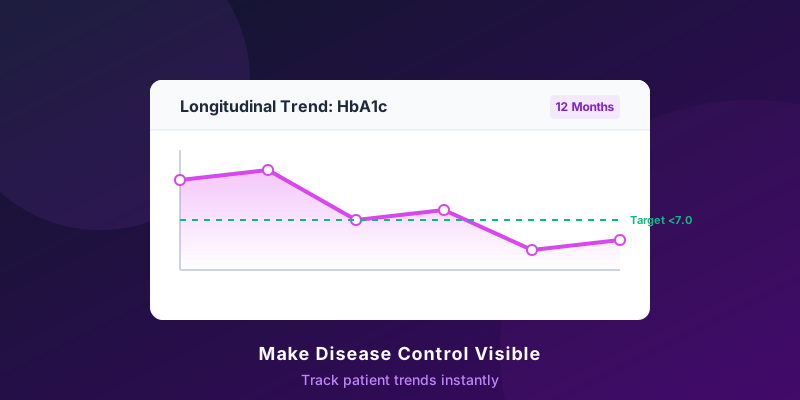
You can't manage what you can't see. On paper, a diabetic patient's 12-month HbA1c journey is invisible. With smart EMR systems that track trends across visits, the long view becomes clear — and doctors can intervene before complications develop.
01 · THE INVISIBLE PROBLEMPaper-Based Chronic Care in India
A patient with Type 2 diabetes walks into an Indian clinic for a follow-up. The doctor asks: "How are your blood sugars?" The patient says: "Good." The doctor orders an HbA1c test. The result comes back two weeks later — and the patient never brings it in. Six months pass. The patient returns. The doctor has no idea whether their last HbA1c was 7%, 8%, or 9%. No baseline exists. The trajectory is invisible.
This is the chronic disease crisis in Indian clinics: fragmented, invisible, paper-based management. Here's what that looks like in practice:
- ✗ No 12-month trend visible
- ✗ Doctor can't see if HbA1c is improving or worsening
- ✗ Complications detected only after they're symptomatic
- ✓ Doctor sees trajectory: trending up or down?
- ✓ Early deterioration flagged before crisis
- ✓ Treatment adjustments data-driven, not guessed
02 · WHY THE LONG VIEW MATTERSTrends Reveal What Single Values Hide
A patient with HbA1c 8.2% could mean three different things:
- → Improving: Was 9.5% six months ago, now down to 8.2%. The treatment is working. Continue the same plan.
- → Stable but controlled: Has been 8.2% for the last year. Acceptable control. Maintain the dose.
- → Worsening: Was 7.5% a year ago, now 8.2%. Patient is deteriorating despite medication. Time to escalate therapy or investigate adherence.
Without the trend, the doctor guesses. They see 8.2% and make a decision that could be right or dangerously wrong. With the long view, they see the full story.
The Cost of Lost Follow-Ups
Follow-up for chronic patients is where disease control lives or dies. But only 55% of chronic patients recall receiving structured follow-up instructions. Without automated reminders and checklists, continuity of care breaks down. Patients miss appointments. Lab tests aren't done on schedule. Medication adherence slips. And the doctor discovers the damage only when the patient arrives with a complication — a cardiac event, kidney failure, or diabetic foot ulcer — that could have been prevented with better tracking.
Three Critical Questions Every Doctor Should Ask
① Is this patient's disease improving, stable, or worsening? You can only answer this with trends. A single value is not enough.
② Is the patient adherent to medication and lifestyle changes? Trends reveal non-adherence. HbA1c not improving despite therapy = patient isn't taking medication or following diet.
③ What's the risk of complications in the next 6 months? Deteriorating trends warrant immediate intervention — a change in medication, more frequent follow-ups, or referral to a specialist.
Chronic Disease Management Features
-
→ Longitudinal trend tracking — HbA1c, BP, creatinine plotted across all visits in a single graph
-
→ Automated follow-up reminders — patients receive WhatsApp reminders 7 days, 1 day, and 1 hour before appointments
-
→ Chronic disease checklists — reminders flag when labs are due (annual kidney function, lipid panel, eye exam for diabetics)
-
→ Risk flagging — system alerts doctor if patient is overdue for critical tests or if values are trending dangerously
-
→ Easy rescheduling — patients reschedule missed appointments in one tap, avoiding continuity breaks
03 · THE INDIA CHALLENGEHigh Disease Burden, Weak Follow-Up Systems
India's chronic disease burden is among the highest in the world. Diabetes prevalence is 17.5%. One in three diabetics has chronic kidney disease. Hypertension affects half of adults over 60. Yet the health systems to manage these patients remain weak.
The result: Only 26% of rural diabetics take medications regularly. Medication non-adherence averages 48% across India. Follow-up is chaotic — only 55% of chronic patients know when to come back. The disease progresses silently in the background, and complications develop by surprise.
The gap between "I diagnosed diabetes" and "I'm monitoring this patient's 12-month journey" is where Indian clinics fail. Paper systems make that journey invisible. EMR systems make it visible and actionable.
Make the Long View Visible in Your Clinic
Automated reminders, trend tracking, and disease checklists — all built into one platform.
Start Free Trial → Book a DemoTransform your practice today
Join thousands of modern clinics utilizing MedHive to automate and grow.
Book a Demo