How Smart EMR Software Prevents Prescription Errors in Indian Clinics
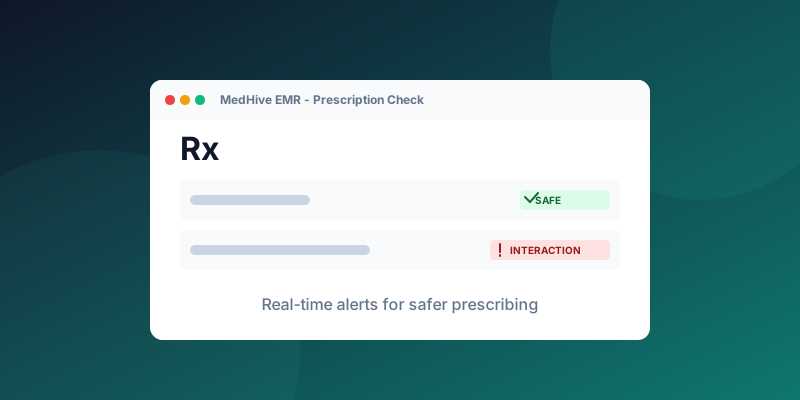
Smart EMR software prevents prescription errors by checking drug interactions in real time, surfacing weight-based dosage guidance, and replacing illegible handwritten slips with structured digital prescriptions — at the moment the doctor is prescribing, before any harm reaches the patient.
01 · THE NUMBERSPrescription Errors Are More Common Than Reported
The WHO estimates that half of all preventable harm in healthcare is medication-related — costing $42 billion globally every year. In India, a 2025 systematic review found prescribing errors in over 32% of clinical cases, with incorrect dosages, missed drug-drug interactions, and omitted instructions as the most common causes.
These aren't careless doctors. They're overworked ones — seeing 60–80 patients a day with four minutes per consultation, prescribing from memory, with no automated safety net between the prescription pad and the pharmacy.
02 · THREE ERROR TYPESWhere Prescription Mistakes Actually Happen
03 · HOW SMART EMRs HELPThree Mechanisms That Make a Measurable Difference
① Real-Time Drug-Drug Interaction Alerts
When a second drug is added to a prescription, a smart EMR checks it against the patient's full medication history and flags known interactions — before the prescription is saved. The WHO notes that computerised prescribing with clinical decision support can reduce medication errors by over 50%. The key is calibration: only meaningful warnings, not an alert for every minor flag that trains doctors to dismiss everything.
② Weight & Age-Based Dosage Guidance
Paediatric and elderly patients require doses adjusted for body weight, age, and renal function. Calculating that manually under time pressure is where errors creep in. A smart EMR surfaces the safe dose range from patient data already in the record — and flags anything outside it before you save.
③ Favourite Prescriptions for Common Conditions
For a UTI, a respiratory infection, or routine hypertension, a doctor prescribes essentially the same drugs and doses dozens of times a week. Writing it fresh each time isn't more careful — it's more error-prone. Saved favourite prescriptions apply the full regimen in one tap and send a clean digital record any pharmacy can read. The handwriting problem disappears entirely.
Prescription Safety Features at a Glance
-
→ Real-time drug-drug interaction alerts — checked against the patient's full medication history, not just today's drugs
-
→ Weight & age-based dosage guidance — automatically surfaced from patient data already in the record
-
→ Favourite prescription templates — save standard regimens for common conditions; apply in one tap and review before sending
-
→ Digital prescription delivery — structured, legible, and sent directly to the patient or pharmacy
04 · PAPER VS. DIGITALWhat Actually Changes When You Switch
| Situation | Paper / Basic Software | Smart EMR (MedHive) |
|---|---|---|
| Patient on 6 drugs gets a 7th added | No check. Doctor relies on memory. | All 6 screened for interactions before saving. |
| Child needs weight-adjusted antibiotic | Manual calculation under time pressure. | Safe dose range surfaced from recorded weight. |
| Pharmacist can't read the prescription | Guesses, calls back, or dispenses incorrectly. | Digital record is clear, structured, unambiguous. |
| Common condition (e.g. UTI, URTI) | Written from scratch — transcription error risk every time. | Favourite prescription applied in one tap. |
See MedHive's Prescription Safety in Action
Real-time interaction alerts. Weight-based dosage guidance. One-tap favourites. Built for Indian clinics.
Start Free Trial → Book a DemoTransform your practice today
Join thousands of modern clinics utilizing MedHive to automate and grow.
Book a Demo