It's been a week since the NMC's new advertising guidelines came into force, and the question every clinic owner should be asking isn't "do these apply to me?" — they do, in force immediately, no grace period — it's "what in my current marketing is now actually non-compliant?" Here's a practical, channel-by-channel audit to run this week.
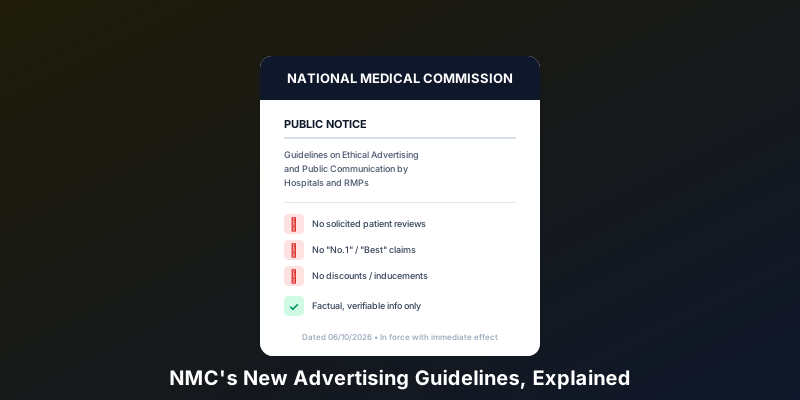
This checklist works through the National Medical Commission's Guidelines on Ethical Advertising and Public Communication (Notice R-13014/01/2024-Ethics, dated 06/10/2026) one channel at a time, so you can go through your own clinic's marketing side by side with it.
1. Google Business Profile and Online Reviews
Asking patients to leave reviews
Any WhatsApp message, SMS, or front-desk script that asks a patient to leave a Google review falls under Explanation V of the guidelines — soliciting patient reviews for promotion is prohibited, regardless of whether the patient's experience was genuinely positive.
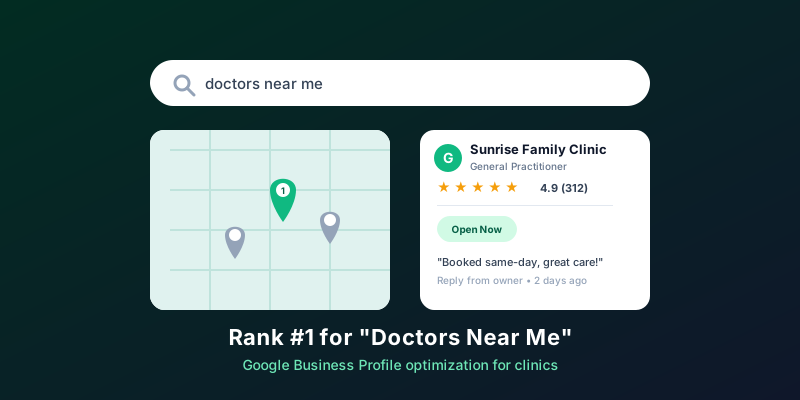
- • Remove any "Rank #1" or "Top-rated" language from your profile description unless it's backed by an independently verifiable, disclosed methodology.
- • Keep the profile itself — name, address, phone, hours, departments, services, accreditation — since factual, verifiable information remains fully permitted.
- • Check whether your clinic ever paid for a "featured" or "sponsored" placement on a doctor-listing platform — the guidelines bar paid ranking of doctors on any platform hosting RMPs.
2. WhatsApp and SMS Patient Outreach
Birthday or anniversary messages with a discount attached
A warm birthday message is fine. A birthday message offering "15% off your next wellness package" is an inducement under 8.1(x), and the guidelines specifically note that greetings on days of national or professional importance "shall not contain advertisement of professional gains."
- • Appointment reminders ("Your appointment is tomorrow at 3pm with Dr. Rao") remain fine — they're operational, not promotional.
- • Review any bulk WhatsApp campaign tool for "mass solicitation" risk — the guidelines name digital mass solicitation explicitly as a serious violation carrying a 6–12 month suspension.
3. Social Media and Website Content
- × Before-and-after photos of procedures, unless published strictly for scientific/educational purposes with anonymized, documented patient consent.
- × Patient testimonial posts or shared reviews, even ones a patient volunteered and tagged your clinic in.
- × Success-rate or "cases treated" numbers used as marketing copy, and any "guaranteed," "painless," or "miracle" language.
- × A doctor's own photo used in a way that functions as self-promotion — including on a consulting room signboard or letterhead.
- ✓ General health-education content, published in an RMP's own name, that makes no cure or superiority claims.
- ✓ A doctor directory page listing names, qualifications, specialties, registration numbers, and availability — the guidelines treat this as a patient-information function, not an advertisement.
4. Marketing Agencies, Influencers & Third Parties
If your clinic works with a digital marketing agency, social media manager, or influencer, pull up the contract. The guidelines are explicit on two points that most existing contracts won't have anticipated:
- • Payment cannot be structured so it's linked to the number of patients procured or referred — a common "per-lead" or "per-booking" agency fee model is now out of bounds.
- • Using an agency doesn't transfer responsibility — the clinic and RMP remain accountable for any content they authorized, commissioned, sponsored, or knowingly permitted, even if the agency posted it.
5. AI-Generated Content
If anyone on your team is using AI tools to draft social captions, generate promotional images, or write patient-facing marketing copy, two rules now apply directly: the content must carry a visible source mark disclosing it's AI-generated, and AI can never be used to manipulate a patient's image, voice, or create a synthetic testimonial or endorsement attributed to a real person.
A One-Week Action Plan
Day 1–2: Audit
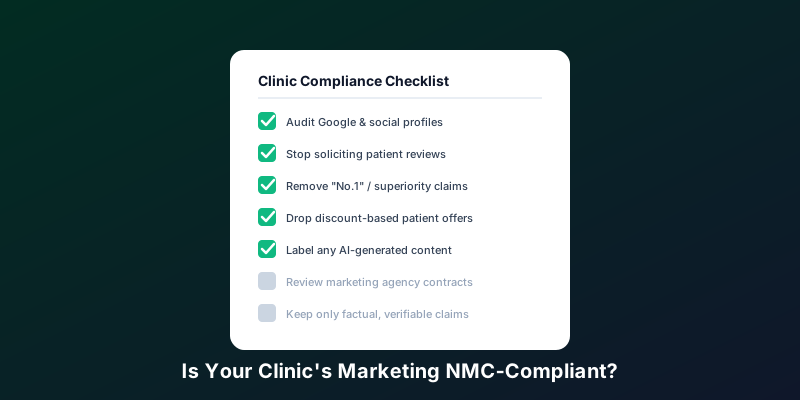
Pull every active channel — GBP, WhatsApp templates, social posts from the last 6 months, website copy — and flag anything matching the prohibited list.
Day 3: Turn off automation
Pause any automated review-request or discount-messaging workflows until they're redesigned to be purely factual or operational.
Day 4–5: Rewrite claims
Replace superlative and comparative claims with factual, verifiable statements — qualifications, accreditation, services, and fees.
Day 6–7: Review contracts
Check agency and platform agreements for per-lead fee structures and have them amended if needed.
None of this means going dark online. A clinic can still maintain an accurate Google Business Profile, a doctor directory, a professionally run website, and informative social content — the guidelines simply draw a firmer line around solicitation, inducement, and unverifiable claims than most clinics' existing marketing assumed.
Frequently Asked Questions
We already have hundreds of patient reviews on Google. Do we need to remove them?
The guidelines don't require removing reviews you didn't solicit, and in most cases a clinic can't unilaterally delete a patient's review from Google anyway. The compliance obligation going forward is to stop actively asking for new ones, not to erase a review history.
Is listing "MBBS, MD" after a doctor's name on a website considered advertising?
No — qualifications, registration details, and specialties are exactly the kind of factual, verifiable information the guidelines permit, and Explanation III/IV actively requires this disclosure on electronic media posts.
Can a clinic still run a loyalty or follow-up reminder program?
Yes, as long as it stays operational rather than promotional — appointment reminders, follow-up care instructions, and factual greetings are not advertising. The restriction specifically targets discounts, offers, and inducements attached to that outreach.
What happens if our marketing agency posts something non-compliant without our approval?
Responsibility centers on content the clinic authorized, commissioned, sponsored, or knowingly permitted. It's still worth formally instructing any agency on these guidelines and reviewing content before it's published, since "we didn't know" is a weak position if the content was contracted and paid for.
Where can I read the full guidelines?
The official notice is Public Notice No. R-13014/01/2024-Ethics, dated 06/10/2026, issued by the NMC's Ethics & Medical Registration Board. It's worth reading the full text directly rather than relying solely on summaries, including this one, before finalizing any compliance decisions.