The DPDP Act deadline for clinics is now less than six months away. On 13 November 2026, the second phase of India's Digital Personal Data Protection framework came into effect, and the government has confirmed that the obligations which matter most to clinics apply from 13 May 2027. This post explains what changed this month, what has not changed yet, and a month-by-month plan a clinic can follow between now and May.
Please note: this is a plain-English overview for clinic owners, not legal advice. Check the current text of the Act and Rules, and speak to a lawyer about decisions specific to your clinic.
What Happened on 13 November 2026
When the Ministry of Electronics and Information Technology (MeitY) notified the DPDP Rules in November 2025, it switched the law on in three stages. The first stage, on publication, set up the Data Protection Board and its procedures. The second stage began one year later.
According to MeitY's announcement on 14 November 2026, the registration framework for Consent Managers came into effect on 13 November 2026, and an online registration portal was launched at dpbi.gov.in. Eligible applicants are companies incorporated in India with enough technical, operational and financial capacity, including a minimum net worth of ₹2 crore.
A Consent Manager is a registered platform through which a person can give, manage, review and withdraw consent for their personal data in one place. In future, some patients may manage their consents through such a platform rather than only through each clinic's own form.
What Has Not Changed Yet
For a clinic, very little became enforceable this month. MeitY has stated that the rights of individuals, the obligations of organisations that handle data, and the Board's inquiry and penalty processes take effect on 13 May 2027. The original commencement notification sets that same date for most of the Act's substantive sections, including those on notice, consent, the duties of organisations that process data, and individuals' rights.
Earlier in 2026 there were reports that the government might shorten this timeline. As of MeitY's November 2026 announcement, the date given for these provisions is still 13 May 2027. Keep an eye on official notifications in case anything changes.
Does Any of This Apply to a Small Clinic?
The Act does not exempt clinics by size. If your clinic stores patient data digitally, in clinic software, a spreadsheet, email or staff phones, plan on the law applying to you. In the Act's terms, your clinic is a Data Fiduciary: it decides why and how patient data is used. Your software vendor, lab partner or cloud provider usually processes data on your behalf, but responsibility stays with you.
Do you need to use a Consent Manager? Nothing in MeitY's announcement says clinics must. A clinic can still give its own notice and collect consent directly. The practical point is to be ready to respect a patient's consent choices wherever they were made.
What Clinics Need Ready by 13 May 2027
MeitY's summary of the Rules sets out the core expectations. In clinic terms:
A clear notice: a separate, easy-to-understand notice stating what data you collect and the specific purpose for using it.
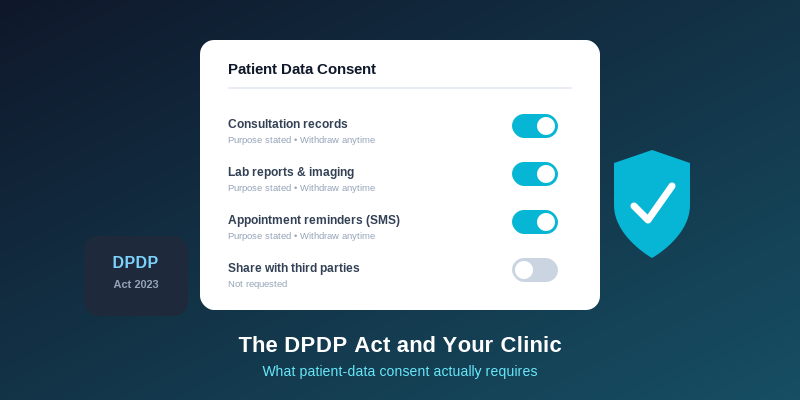
Real consent: consent that is clear and informed, which patients can withdraw at any time, as easily as they gave it.
Security: reasonable safeguards to keep patient data safe. The Act's penalties are heavy, up to ₹250 crore for failing to maintain reasonable security safeguards.
Breach response: if data is breached, affected people must be told without delay, in plain language, what happened, the likely impact, what you are doing and whom to contact. The Rules also require reporting to the Board, so check the current Rules for the exact timelines.
A contact person: clear contact details for data queries, such as a designated person at the clinic.
Handling requests: patients can ask to access, correct, update or erase their data, and requests must be dealt with within a maximum of ninety days.
There is some relief for healthcare. MeitY's summary notes that verifiable parental consent for children's data is not required for essential services such as healthcare. Paediatric and family clinics should still read the exact scope of that exemption.
Erasure requests need care. Medical and clinical establishment rules in your state may require you to keep records for a set period. Find out which retention periods apply to you and write them down.
A Six-Month Plan for Your Clinic
December: map your data
List every place patient data lives: registration forms, clinic software, billing, lab portals, email, WhatsApp phones and paper files that get scanned. Note who can see each one.
January: trim and split
Remove registration fields you never use. Separate consents for treatment, appointment reminders, ABDM record sharing and any non-essential messages, so a patient can agree to one without the others.
February: write the notice
Draft a one-page notice in plain language, in English and your main local language. Our guide to what patient-data consent requires covers what to include.
March: check vendors and security
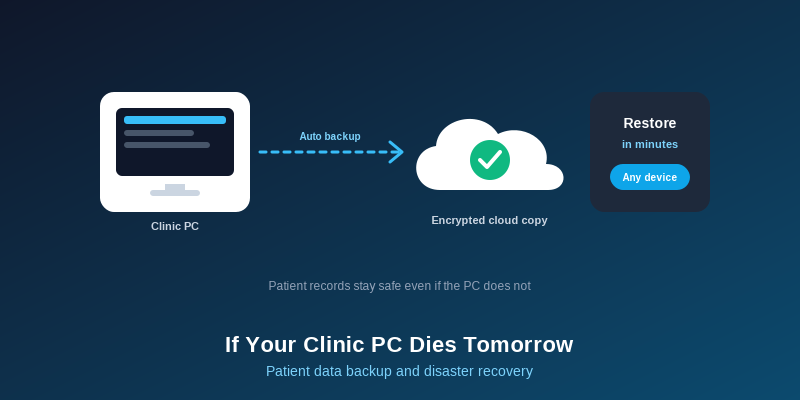
Ask your software, lab and cloud providers where data is stored, who can access it, how it is backed up and how they would tell you about a breach. Turn on role-based access so staff only see what they need. Our posts on security and data backup go deeper.
April: rehearse a breach and train staff
Write a one-page breach plan: who decides, who informs patients, who reports. Walk reception through the new form and how to handle a request to withdraw consent or access records.
May: go live and record it
Switch to the new form and notice, and make sure every consent is recorded with a date. Keep a short file of what you changed and when.
Frequently Asked Questions
When does the DPDP Act apply to clinics?
According to MeitY, the main obligations on organisations that handle personal data, and patients' rights, take effect on 13 May 2027. Some provisions, such as those setting up the Data Protection Board and registering Consent Managers, are already in force. Check the current notifications in case dates change.
What changed for clinics on 13 November 2026?
The Consent Manager registration framework began and the registration portal opened. For most clinics this does not create new day-to-day duties yet, but it is a signal that the May 2027 deadline is close.
Do clinics need to register with the Data Protection Board?
The registration that opened in November 2026 is for companies that want to become Consent Managers, not for clinics as data handlers. Check the current Rules for any obligations that apply to your organisation.
Can we keep using WhatsApp for patient reminders?
Reminders are a reasonable purpose to include in your notice and consent, as long as patients agree and can opt out. See our post on WhatsApp and patient communication for what to keep off chat.
Get Your Records in One Place
Mapping data is much harder when patient information is spread across paper files, spreadsheets and personal phones. MedHive Pro keeps registration, records, billing and role-based staff access in one cloud system, which makes the mapping and access steps simpler. Consent design and policies remain your clinic's decisions. See how MedHive Pro works or book a demo.